What Are Spur Gears Used For?
Blog 2026-04-13
Spur gears are the cornerstone of power transmission. They power everything from industrial machinery to precision robots. Specifically, they perform the crucial task of transmitting torque and controlling speed. Because of their design, they offer efficient and reliable performance across numerous fields.Here is the introduction that meets your requirements. This article provides a detailed explanation about what are spur gears used for, analyzes their working principle, key scenarios. And lastly it will explain why steel is the preferred material for heavy-duty applications.
What Are Spur Gears
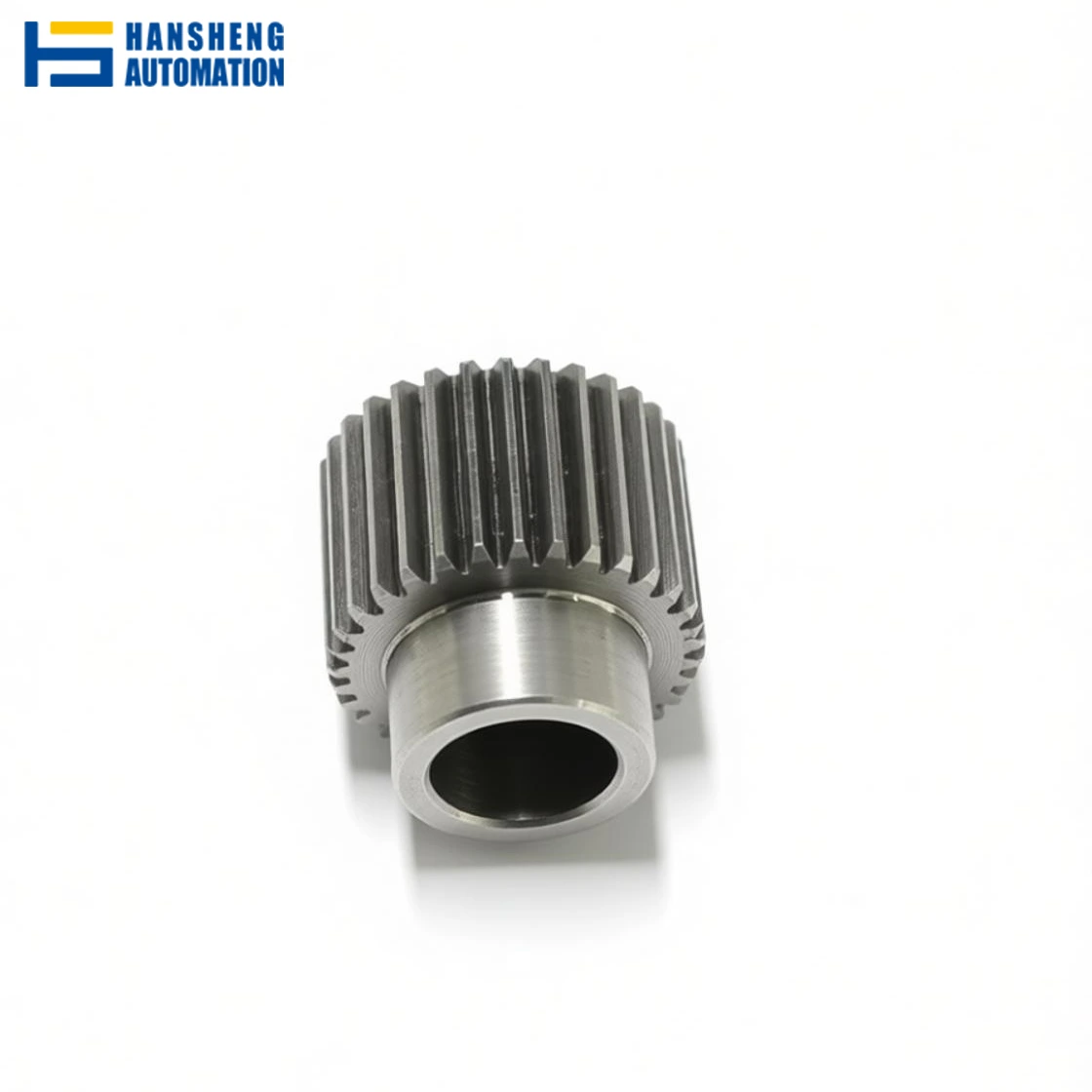
Spur gears are basic cylindrical gears with teeth projecting radially. Their primary purpose is to transmit motion between parallel shafts. Because the design is straightforward, manufacturing is well-understood and performance is highly reliable.
However, being simple does not mean they are limited. In fact, spur gears are the main force for power transmission across many industries. They are found in packaging lines, printing machines, mining equipment, and precision robots.
Therefore, understanding their specific uses is crucial for mechanical engineers and procurement professionals. This is especially true for steel spur gears, which are preferred for demanding industrial applications.
How Do Spur Gears Work
The operating principle of a spur gear is elegantly simple. Straight teeth mesh directly with the teeth of a mating gear mounted on a parallel shaft. When one gear rotates, its teeth push against the teeth of the next, transferring rotational motion and torque from one shaft to another.
When two spur gears mesh, they interlock without leaving gaps, ensuring there is no slippage and that machines maintain uninterrupted power transmission between mechanical components. Because the teeth are straight and engage along a single line of contact, they produce only radial forces which simplifies shaft and bearing design significantly compared to helical or bevel alternatives.
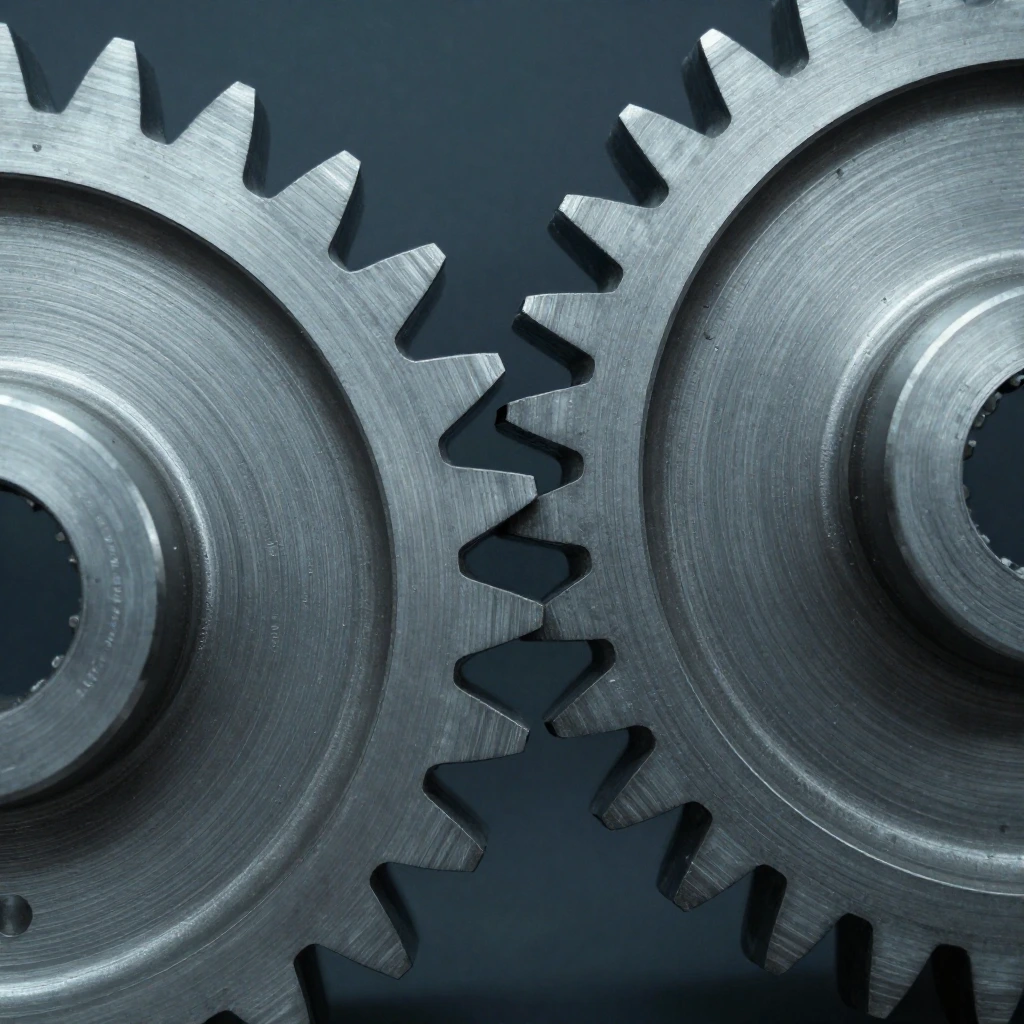
By adjusting the number of teeth between the driving and driven gear, engineers can achieve different gear ratios. They can increase torque while reduce speed, or increase speed while reduce torque. It makes spur gears highly versatile across a wide range of mechanical setups. Multiple straight gears arranged in series form a gear set, which can achieve significant deceleration or amplification within the transmission system.
Key Applications
Industrial Machinery and Conveyor Systems
Spur gears are widely used in industrial automation for driving conveyor systems, packaging machines, and robotic arms. Their ability to maintain consistent torque and speed makes them ideal for precise and reliable motion control applications. In manufacturing environments running 24/7, the simplicity of spur gear directly translates to lower maintenance costs and less unplanned downtime.
Printing Presses and Textile Equipment
Spur gears control paper feed rates in printing presses and drive roller systems in textile machinery, where consistent speed ratio and zero-slip power transmission are critical to product quality. Any backlash or speed variation in these applications translates directly into defects at high production rates.
Mining and Heavy Equipment
In crushers, mills, and excavators, steel spur gears handle the high-torque, heavy-load conditions that plastic or aluminum alternatives simply cannot sustain. They are perfect for speed reduction and torque multiplication applications, such as in the case of crushing machines.
Robotics and Automation
In robotics, spur gears control arm movement, rotation, and precision tasks. The predictable, backlash-controlled motion of precision spur gears is essential in pick-and-place robots, CNC axis drives, and collaborative robot joints.
Clocks, Instrumentation, and Consumer Appliances
Virtually all timepieces utilize a complex mesh of spur gears in the timekeeping mechanism. At the other end of the size spectrum, washing machines, dryers, and food processors all rely on spur gear assemblies to transfer motor power to rotating drums and blades.
Why Steel Spur Gears Are the Preferred Choice for Industrial Applications
The manufacturing process for spur gear requires the use of high-grade materials, including alloy steel and stainless steel, to ensure durability, load capacity, and low wear rates. Steel delivers a combination of properties that no alternative material can fully replicate:
Strength and load capacity
Steel spur gears withstand higher contact stresses and transmit greater torque without tooth deformation or fatigue failure, which is essential in heavy industry.
Dimensional stability
Unlike plastic gears that can creep or deform under sustained load and temperature, steel spur gears maintain their geometry and gear ratio accuracy across wide operating conditions.
Wear resistance
With proper heat treatment, steel tooth surfaces resist pitting and abrasion over long service cycles, maintaining tooth profile accuracy far longer than softer materials.
Versatility through material grades
Carbon steel suits general-purpose industrial applications; alloy steels and case-hardened grades serve high-load, high-speed environments; stainless steel variants are selected for corrosive or food-grade conditions.
For applications where a steel spur gear must deliver precise, reliable power transmission under real industrial load, gearmfc company‘s steel spur gear is engineered to meet the demands of industrial machinery and available in a range of tooth counts, modules, and bore configurations to suit your requirements.
Advantages and Limitations of Spur Gears
Key advantages
- Spur gear is known for their high efficiency in power transmission. Their straight-tooth design ensures smooth meshing during operation.
- They are cost-effective to manufacture, easy to install and replace, and require no complex alignment procedures that helical or bevel gears demand.
- By adjusting the teeth count, you can achieve different rotational speeds, which giving engineers flexibility to customize gear ratios without redesigning the entire drivetrain.
Known limitations
- Spur gear produce more noise than helical gear at high speeds because teeth engage and disengage abruptly along their full width simultaneously, generating impact load at each mesh cycle.
- They also generate no axial load compensation, so applications with combined radial and axial forces require supplementary bearing arrangements.
Conclusion
Spur gears are the backbone of mechanical power transmission. It is simple in design, proven in performance, and irreplaceable across hundreds of industrial applications. From conveyor drives and packaging machinery to precision robotics and heavy mining equipment, spur gears deliver consistent torque, reliable speed control, and long service life when properly specified and maintained.
When the application demands strength, wear resistance, and dimensional stability under sustained industrial load, steel spur gears are the engineering-grade solution. The right material, the right tooth geometry, and the right manufacturing tolerances are what separate a spur gear that performs from one that fails prematurely.
If you are sourcing steel spur gear for industrial machinery, conveyor systems, or precision drive applications, explore gearmfc’s full range of steel spur gear. It’s engineered for the load requirements and dimensional accuracy your application demands.