Gear Shaping Service
Brand: Hansheng
Accuracy grade: ISO/DIN/GB level 7-9
Maximum module: 4.0
Diameter: 60 mm–200 mm
Introduction
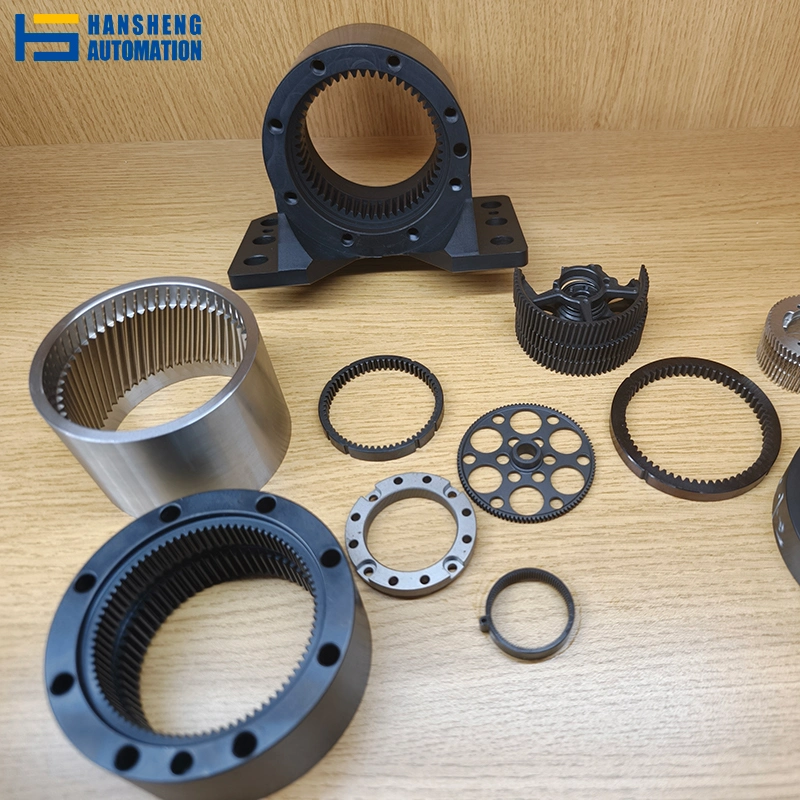
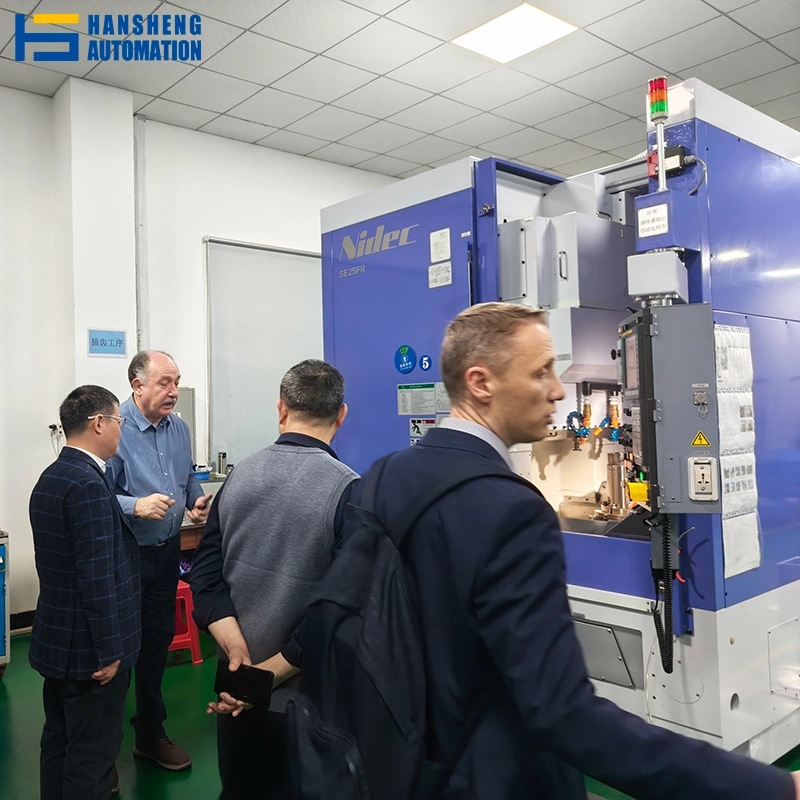
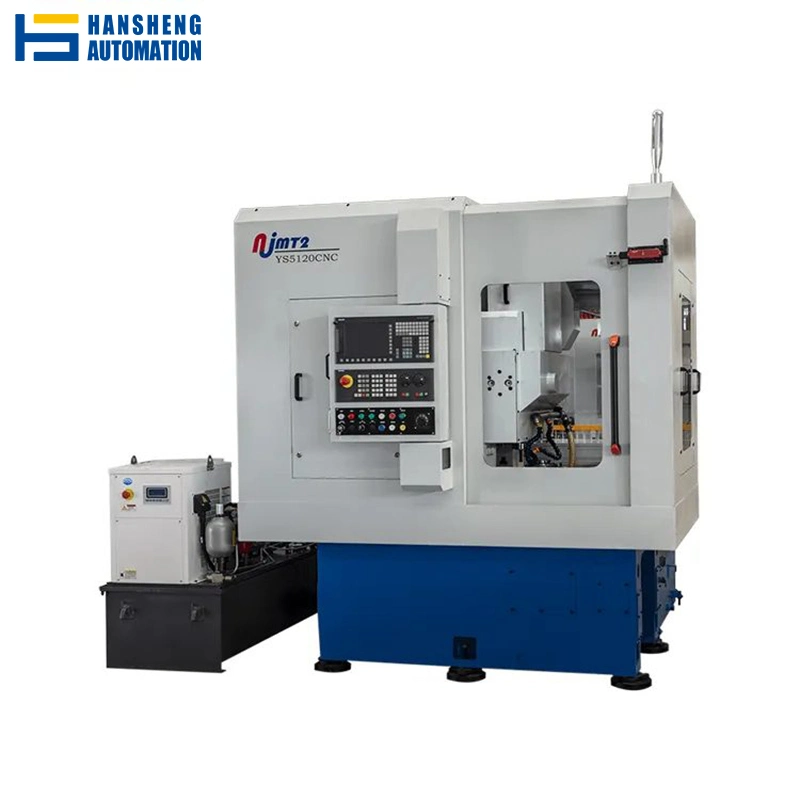
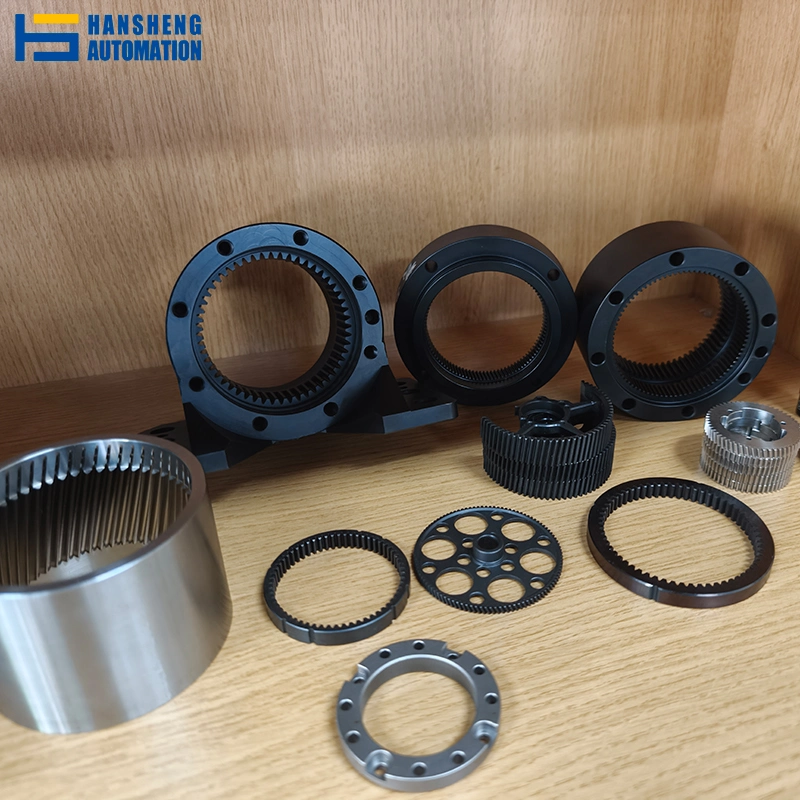
Hansheng manufactures custom internal gears, external gears, cluster gears, and splines to your drawing using the YS5120CNC four-axis high-speed CNC gear shaping machine and the Nidec SE25FR gear shaper. Our gear shaping achieves ISO/GB grades 7–9. Maximum module 4.0, external gear diameter up to 200 mm, internal gear minimum bore 60 mm plus cutter diameter.
What Is Gear Shaping, and When Is It the Only Option?
What Is Gear Shaping?
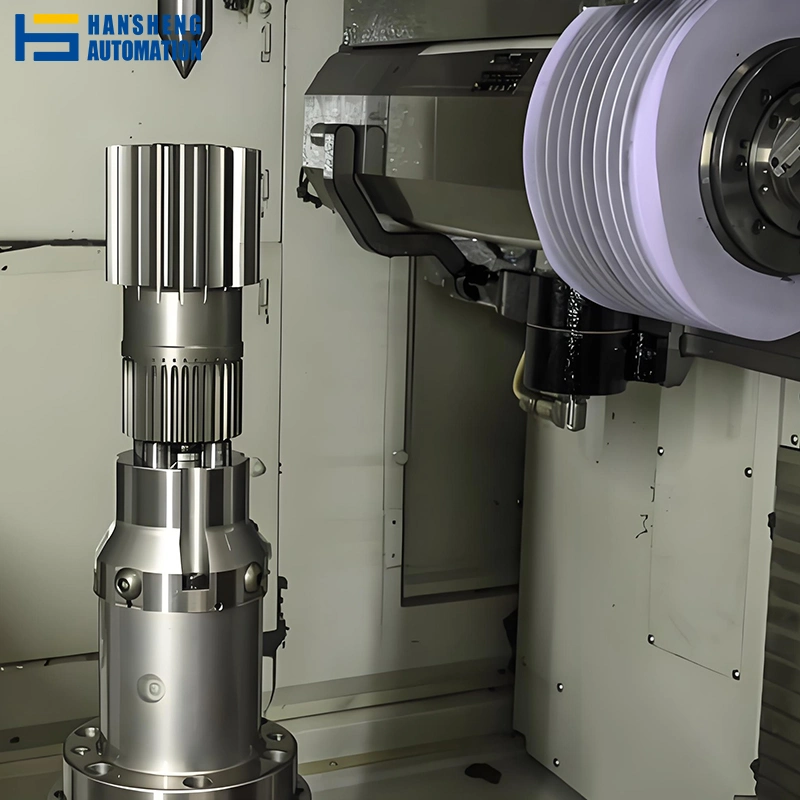
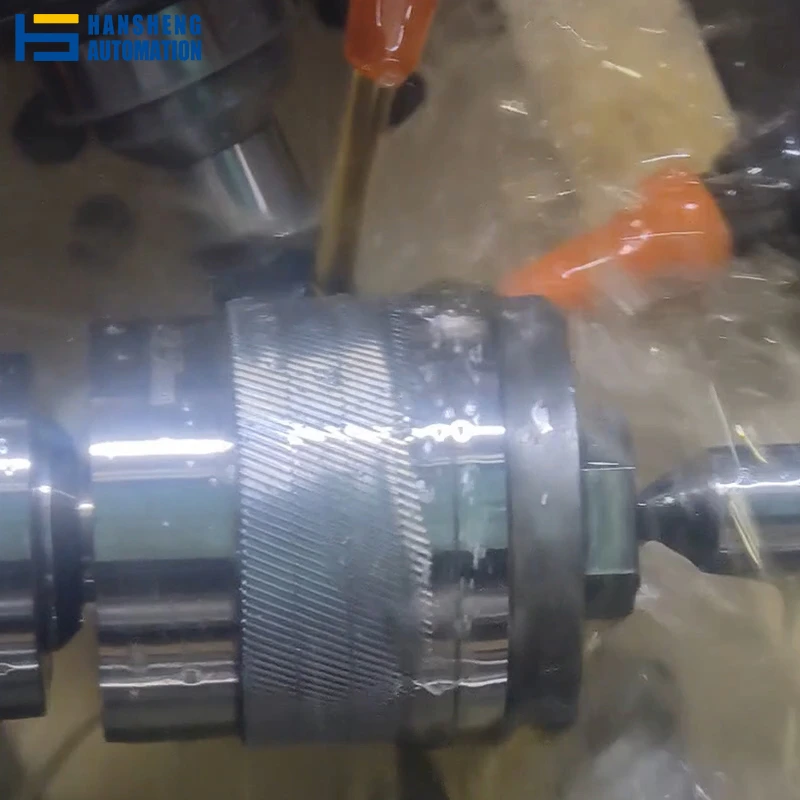
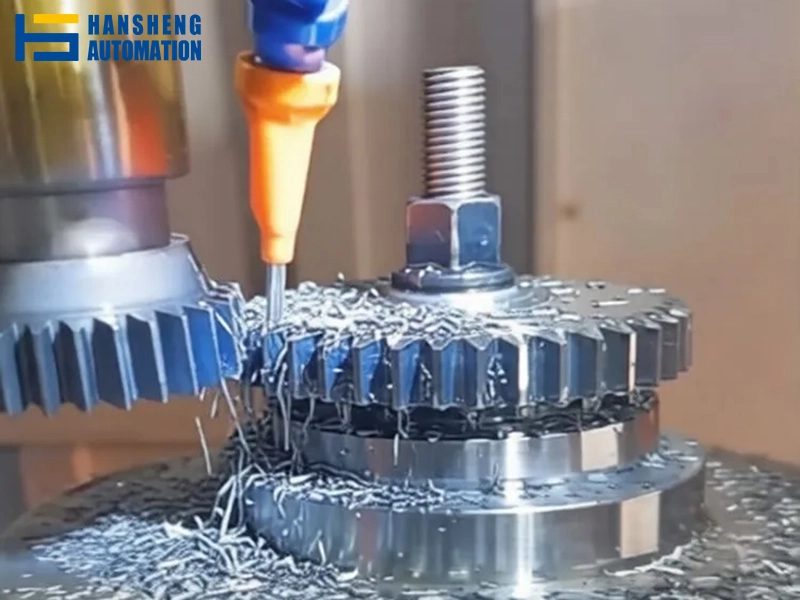
Gear shaping uses a reciprocating gear-shaped cutter that moves up and down in sync with the rotating blank, removing thin layers per stroke to generate the full involute profile. The cutter enters axially, reaching geometries inaccessible to hobbing or skiving.
When Is Gear Shaping the Right Choice?
| Your Gear Situation | Best Process |
|---|---|
| Internal gear, unobstructed, medium-to-high volume | Skiving |
| Internal gear with shoulder, flange, or blind bore | Shaping |
| Cluster gears (multiple gear sets on one shaft) | Shaping |
| External gear near a shoulder (limited clearance) | Shaping |
| Internal or external splines | Shaping |
| Segment gears (partial arc / limited rotation) | Shaping |
| Standard external gear, no geometric restrictions | Hobbing |
Not sure which process applies to your drawing? Send it to us. We will review the geometry and recommend the right process at no charge before you commit.
Our Gear Shaping Capabilities
Gear Shaping Equipment and Technical Parameters
Our operates two type gear shaping machines handling different size ranges and production volumes. Both are maintained to production tolerance and available for custom orders.
Equipment and Core Parameters
| Parameter | YS5120CNC High-Speed CNC Gear Shaper | Nidec SE25FR CNC Gear Shaper |
|---|---|---|
| Axes | 4-axis, 3-axis simultaneous CNC | CNC |
| Gear Types | Internal spur, external spur, cluster gears, splines, segment gears | Internal and external, small-module precision gears |
| Maximum Module | 4.0 | — |
| Maximum External Gear Diameter | 200 mm | — |
| Minimum Internal Gear Bore | 60 mm + cutter diameter | — |
| Stroke Speed | 1,750 strokes/min | — |
| Machine Characteristics | High rigidity, low vibration, low noise, high automation, wide range of circular and radial feed rates | Precision-oriented, suited for tight-tolerance small gears |
| Best For | Medium-to-high volume internal/external gears, cluster gears, high-efficiency production | Low-volume, prototype, and small-module precision work |
Precision Grade
| Grade | Route |
|---|---|
| ISO / DIN / GB Grade 7 – 9 | Direct from shaping |
| Grade 7 | Shaping with controlled process parameters |
| Grade 6 – 7 | Shaping + post-shaping grinding (where geometry permits) |


Materials We Shape
Materials Available for Custom Gear Shaping
| Material Category | Common Grades | Typical Treatment | Best For |
|---|---|---|---|
| Carbon Steel | 45# / S45C / 1045 | Hardening (HRC 40–50) / Normalizing | General-purpose, moderate load, cost-sensitive |
| Case-Hardening Alloy | 20CrMnTi / 20CrMo / 17CrNiMo6 | Carburizing + Quenching (HRC 58–62) | High-load internal, planetary & cluster gears |
| Through-Hardening Alloy | 42CrMo / 40Cr / 8620 | Quench & Temper (HRC 28–35) | Cyclic load hubs, uniform-hardness gears |
| Stainless Steel | 304 / 316 / 17-4PH | Solution annealed / Precip. hardened | Food, medical & washdown (Corrosion-resistant) |
| Aluminum Alloy | 6061-T6 / 7075-T6 | T6 temper | Robotics & automation (Weight-sensitive) |
| Brass / Bronze | C360 / C932 / CuSn8 | N/A | Low-friction, instrument splines, worm gears |
| Engineering Plastics | POM / PA66 / PEEK | N/A | Low-load, noise-sensitive, non-conductive |
Already have material specified on your drawing? Upload it and we will confirm machinability, flag any shaping-specific issues (such as work-hardening tendency in certain stainless grades), and recommend any pre-machining or heat treatment steps.
Upload Your Drawing & Get a Quote
FAQ
The minimum internal bore we can shape depends on the module, because the cutter diameter scales with module. As a general guide: at module 1.0, a bore of approximately 30–40 mm is feasible; at module 2.0, approximately 50–60 mm;
Skiving (ISO 5–6, faster) for open internal bores. Shaping (ISO 7–9) for restricted access (flanged, blind, cluster). Send us your drawing — we’ll recommend the right process. We have both in-house.
Standard involute profiles with profile shift (x-modification) are straightforward. Profile modifications (tip relief, root relief) are possible within the limits of available cutter tooling. Segment gears with non-standard arc extents are within our capability.
At minimum: module, number of teeth, pressure angle, face width, bore dimensions and tolerances, material, required precision grade (ISO/DIN/GB), heat treatment requirement, surface finish, and quantity.
Minimum order quantity is 5 pieces.