Power Skiving with Kashifuji KPS30 Achieving ISO 5 Internal Gears Through Skiving and Grinding
Blog 2026-05-09
Gear shaping works for internal gears. Broaching works too. But when the target is ISO 5 accuracy at production scale, both processes hit a wall — shaping on speed, broaching on flexibility.
What Is Power Skiving?
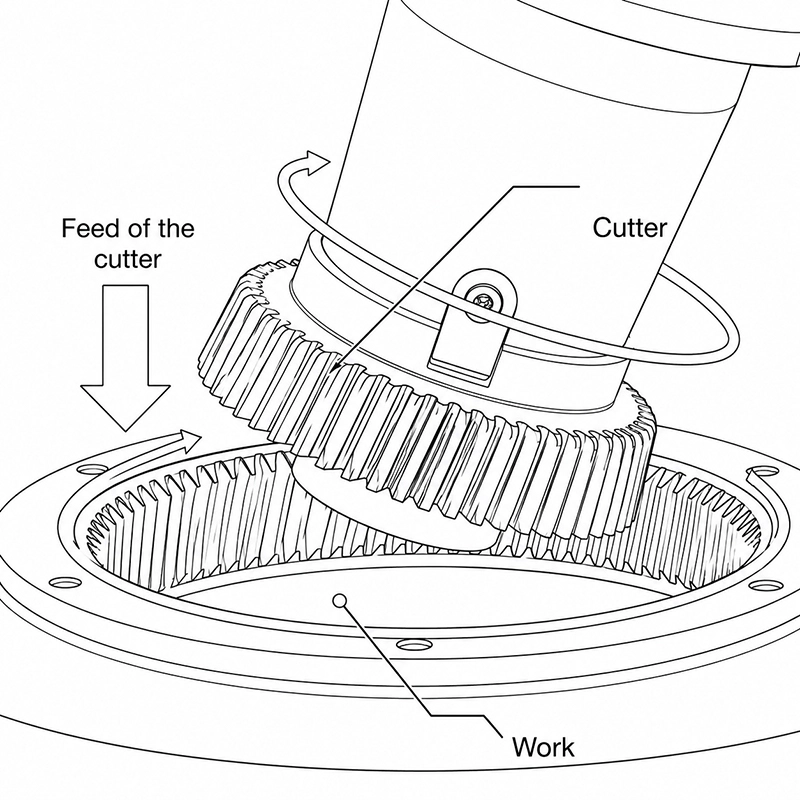
Power skiving is a continuous gear cutting process that machines internal and external gears using a disc-shaped skiving cutter set at a crossed axis angle relative to the workpiece — typically between 10° and 25° for internal gears.
The cutter and workpiece rotate simultaneously at a precisely synchronized speed ratio. As the cutter feeds axially through the gear blank, the crossing angle between the two axes creates a tangential cutting velocity — this is what actually removes material and generates the tooth profile. Think of it as two helical gears meshing at a skewed angle, except one of them is cutting the other.
The result is a continuous, uninterrupted generating motion — no reciprocating strokes, no tool retraction — which is exactly why power skiving is so much faster than traditional methods.
How It Compares to Gear Shaping and Hobbing
Most engineers encounter power skiving when looking for a better alternative to gear shaping on internal gears. Here’s how the three processes actually differ:
| Gear Hobbing | Gear Shaping | Power Skiving | |
| Internal gears | Not possible | Yes | Yes |
| Cutting motion | Continuous rotation | Reciprocating stroke | Continuous rotation |
| Speed vs. shaping | — | Baseline | 3–6× faster |
| Typical accuracy | ISO 6-8 | ISO 6-8 | ISO 6, up to ISO 5 |
| Shoulder clearance | Limited | Limited | Good |
Gear hobbing is physically unable to cut internal gears — the hob is too large to fit inside the bore without interference.
This is why power skiving has become the go-to process for precision internal gears in industries like precision planetary gearbox for a humanoid robotics actuator, EV drivetrains, and other planetary gearboxes — applications where both tight tolerances and production efficiency are non-negotiable.
Why Internal Gears Demand More from Your Process
Unlike external gears where the tool approaches from the outside, internal gear cutting happens inside a confined bore.
Three Challenges For Internal Gear Machining
1. Tool interference and space limitations
The cutting tool has to fit inside the gear blank without colliding with the bore wall or any adjacent shoulders. This rules out hobbing entirely, and puts strict limits on shaping tool diameter and overhang length. The deeper the gear, or the closer it sits to a shaft shoulder, the harder it gets.
2. Rigidity loss from long tool overhang
In gear shaping, the tool holder often has to extend deep into the bore — and the longer the overhang, the more the tool deflects under cutting force. That deflection shows up directly in your tooth profile error and pitch consistency.
3. Reciprocating motion limits your speed ceiling
The reciprocating stroke of gear shaping means about half the cycle is non-cutting idle travel. You can increase stroke speed, but only up to a point before vibration and tool wear become unacceptable.
Where Traditional Processes Fall Short
Broaching solves the speed problem — it’s fast and produces good surface finish — but it’s dedicated to a single gear geometry. Change the tooth count, module, or helix angle, and you need a new broach. For high-mix production or custom gear work, the tooling cost and lead time make broaching impractical.
The gear shaping process is still widely used due to its high flexibility and the mature technology of the machine tools. However, it is unsuitable for internal gears that require high precision, small module designs, or extremely high shoulder clearance.
Kashifuji KPS30 — Technical Capabilities
The Kashifuji KPS30 is a dedicated CNC gear skiving machine developed by Kashifuji Works, a Japanese machine tool manufacturer with a long focus on precision gear cutting equipment. The KPS30 is purpose-built for power skiving — not a machining center with a skiving option bolted on — which means the spindle rigidity, synchronization accuracy, and axis configuration are all designed around this process from the ground up.
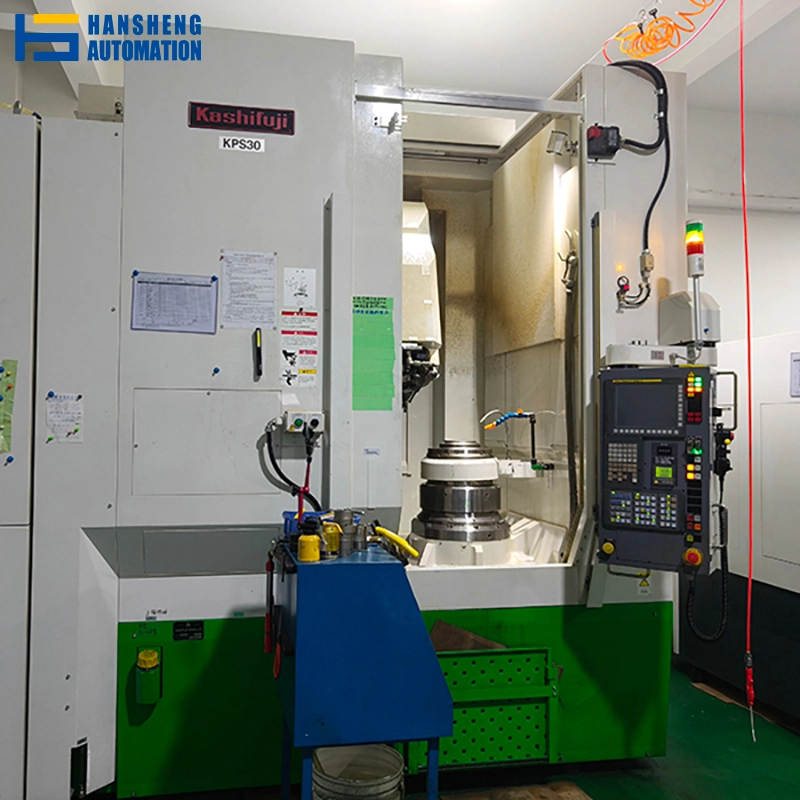
Key Specifications
| Parameter | KPS30 |
| Max. workpiece outside diameter | 300 mm |
| Max. workpiece module | 4 |
| Cutter head swivel range | ±30° |
| Cutter spindle speed range | 200 – 2,500 rpm |
| Workpiece spindle max. speed | 1,500 rpm |
| Machine weight | 11,000 kg |
The ±30° cutter head swivel gives the KPS30 flexibility to handle both spur and helical internal gears across a wide helix angle range without retooling the machine setup.
What It Actually Delivers in Production
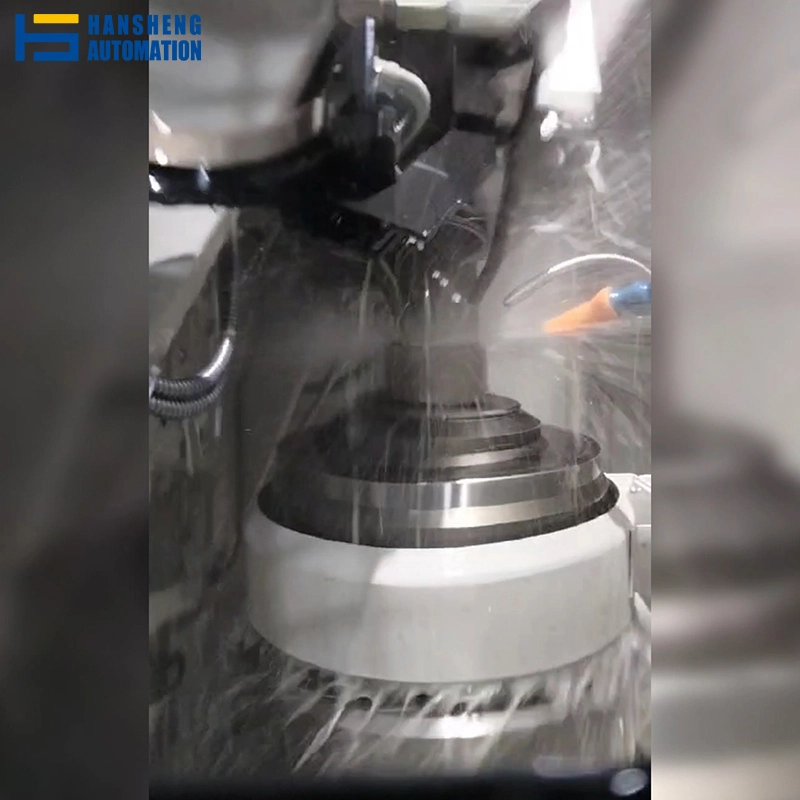
In our experience running the KPS30 in production, the direct-off-machine accuracy for internal gears typically lands at ISO 6. This is consistent with what the power skiving process is capable of under normal soft-machining conditions.
Under tighter process controls — optimized cutting parameters, high-quality skiving cutters, stable workholding, and well-prepared gear blanks — select parts can reach ISO 5 directly off the machine. But this is not the norm for batch production.
What the KPS30 does reliably and repeatedly is produce clean, consistent ISO 6 parts at high throughput — with tooth profiles, pitch accuracy, and surface finish that are well-suited as a pre-finish state going into heat treatment and subsequent gear grinding.
Visit our “About Us” page to view more gear manufacturing processes.
Where the KPS30 Fits Best
The machine’s 300 mm diameter capacity and module 4 ceiling make it well-matched for:
- Planetary gearbox ring gears — small-to-medium module, high volume, tight pitch tolerances
- Robot joint internal gears — small module, close shoulder clearances, ISO 5–6 requirements
- EV drivetrain components — demanding NVH requirements, where surface finish quality from skiving directly impacts downstream grinding efficiency
- Custom precision internal gears — low-to-medium batch sizes where broaching tooling cost is unjustifiable
For gears above module 4 or outside diameter beyond 300 mm, the KPS30 is outside its design envelope and a different machine class would be needed.
From Skiving to Grinding — The Two-Step Path to ISO 5
If power skiving already delivers ISO 6, why add a grinding step?
The short answer: heat treatment.
What Happens Between Skiving and Grinding
After power skiving, most precision internal gears go through a heat treatment process — typically case carburizing followed by quenching — to harden the tooth surface and achieve the service life required for high-load applications.
The problem is that hardening introduces distortion. As the gear heats up and quenches, internal stresses redistribute unevenly across the part. The result is measurable geometric change: tooth profile deviation increases, pitch error grows, and in some cases helix angle shifts slightly. The magnitude varies by gear geometry, material, and heat treatment process, but a distortion-driven accuracy loss of one to two ISO grades is common.
A gear that left the KPS30 at ISO 6 can easily come out of the furnace at ISO 7 or worse.
This is not a flaw in the skiving process — it’s a fundamental characteristic of thermal processing that affects every gear cutting method equally. Hobbing, shaping, broaching — they all face the same problem. The question is what you do next.
What Gear Grinding Corrects
Gear grinding is a hard-finishing process performed after heat treatment. Using a precision abrasive wheel that generates the involute tooth profile, it removes a controlled amount of stock from the hardened tooth flanks — typically 0.05 to 0.15 mm — to correct the distortions introduced by heat treatment and bring the gear to its final accuracy grade.
For internal gears, this means:
- Profile deviation is corrected back within ISO 5 tolerances
- Pitch accuracy is restored and tightened across all teeth
- Surface roughness improves significantly — from a typical post-skiving Ra of around 1.6 µm down to Ra 0.4 µm or better after grinding
- Tooth flank geometry is precisely controlled, which directly reduces gear noise under load
The Full Process Chain
(OD, bore, face)
(ISO 6 tooth profile, pre-grind stock allowance left on flanks)
(Carburizing + quenching, surface hardness 58–62 HRC typical)
(Bore and face correction if needed)
(Removes distortion, achieves ISO 5 tooth accuracy)
(ISO 5 confirmed on CMM / gear measuring center)
Why Skiving Quality Determines Grinding Outcome
Skiving looks like roughing. Grinding looks like finishing. But when the target is ISO 5 at production scale, skiving quality sets the ceiling — not just feeds the grinder.
Three things matter:
- Even flank stock — uneven stock extends cycles or fails parts.
- Pitch error well inside ISO 6 — near the limit, heat treatment pushes it over.
- Consistent surface texture — poor texture adds spark-out passes, not geometry.
On the KPS30, rigid spindles and precise synchronization deliver these inputs. A well-controlled skiving step doesn’t just prepare for grinding — it decides what grinding can achieve.
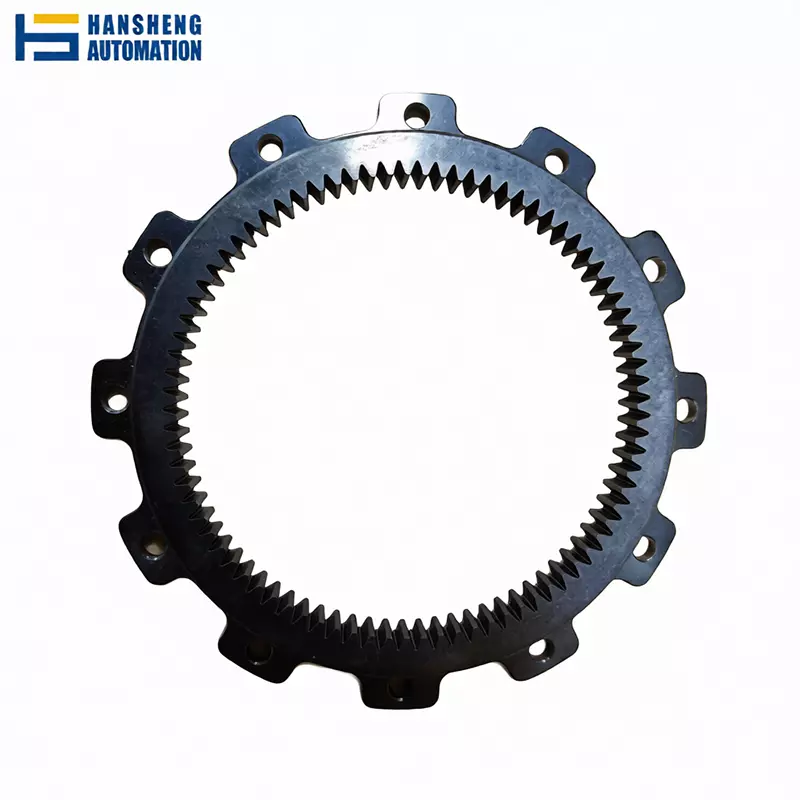
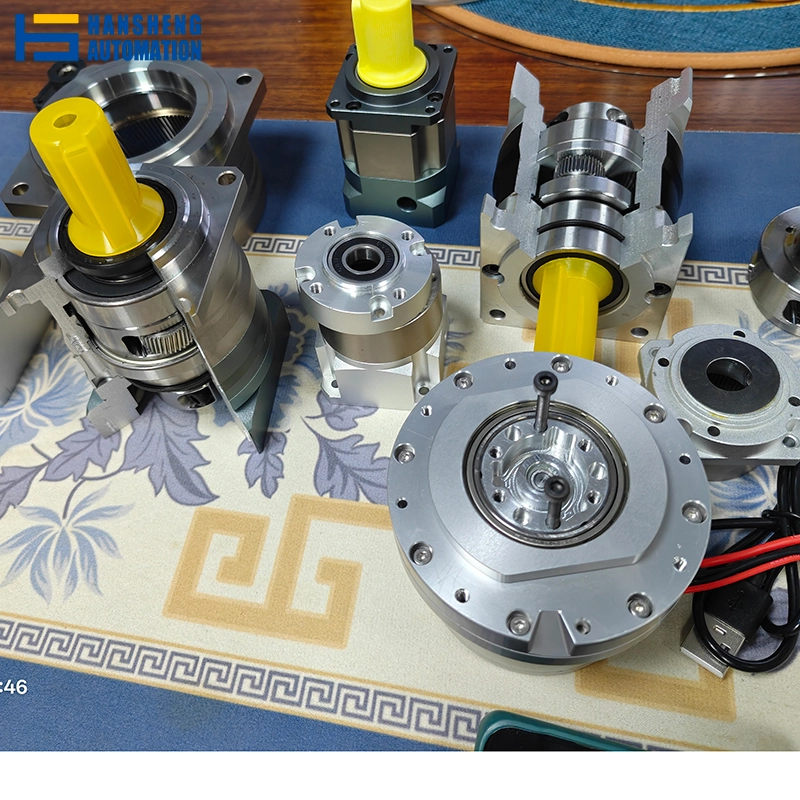
Case Study: Precision Planetary Gearbox for Humanoid Robot Actuator
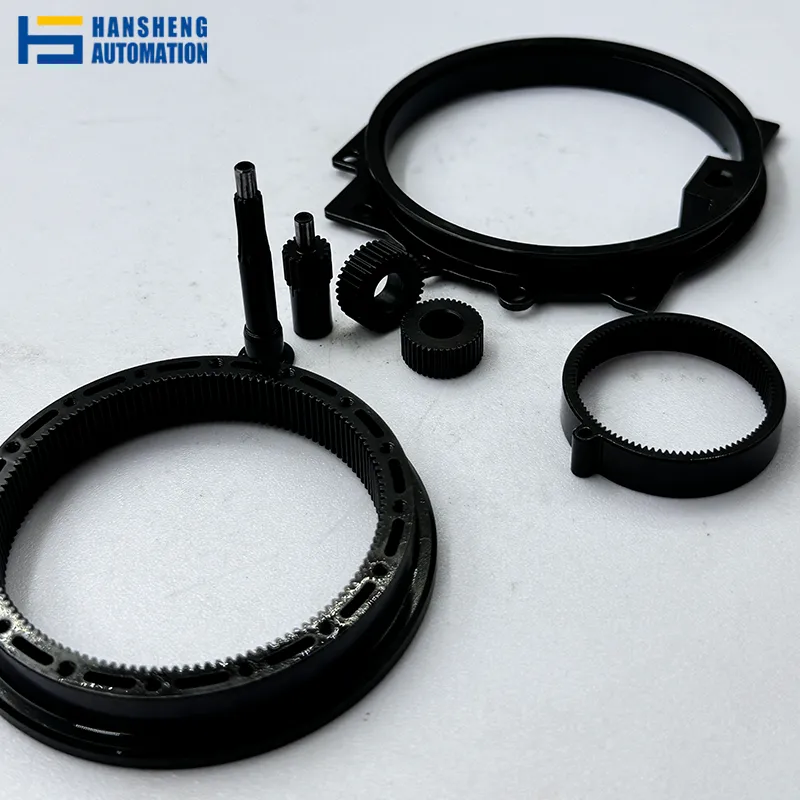
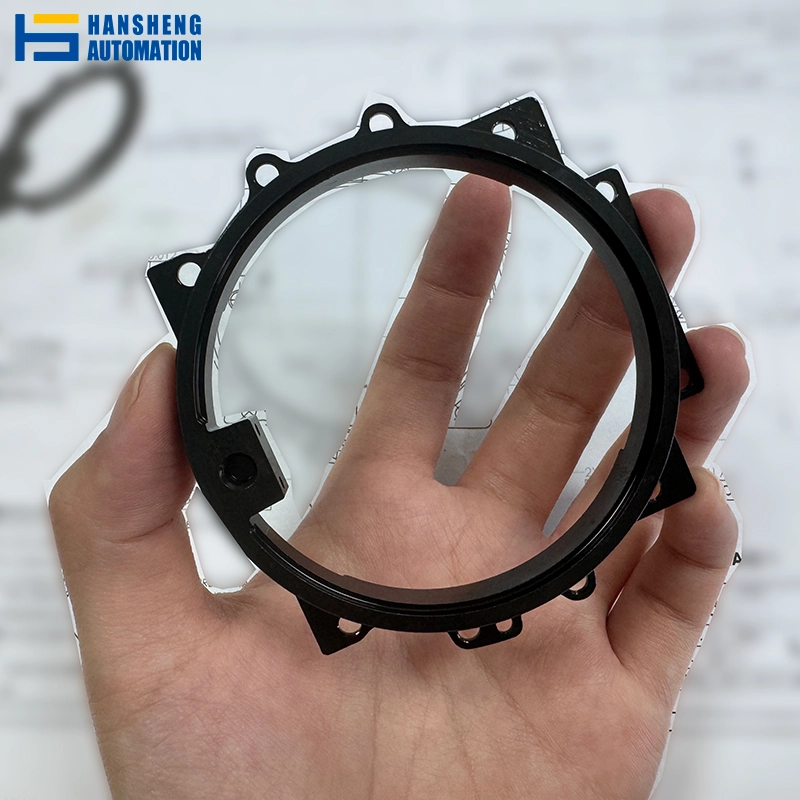
This client is from the UK. A compact planetary gearbox for a humanoid robot joint required low backlash, minimal noise, and consistent torque across a wide range. All gears needed ISO 5–6 accuracy. The internal ring gear — the most demanding component — was the critical part.
Scope
- Precision internal ring gear (planet carrier interface)
- Planet gears and sun gear
- CNC‑machined structural components (housings, flanges, carrier plates)
All parts had to meet tight tolerances for direct actuator assembly — no additional fitting.
Process (ring gear)
- Turn to pre‑skiving dimensions (controlled bore/face datums)
- Power skive on Kashifuji KPS30 → ISO 6, consistent stock across all teeth
- Case carburize + quench for surface hardness
- Hard turn to recover bore/face datums
- Internal gear grind → ISO 5
- 100% inspection on gear measuring center
Planet gears, sun gear, and CNC components were processed in parallel with full inspection records.
Outcome
All UK‑bound components met ISO 5 accuracy. The internal ring gear passed first‑article inspection with no rework. Customer confirmed direct assembly integration — no fitting issues.
When Do You Need Gear Grinding After Skiving?
Not every internal gear needs to go through grinding. Adding a grinding step increases process time and cost — and for applications where ISO 6 is perfectly acceptable, it’s unnecessary. The decision comes down to three factors: the required accuracy grade, the application load and speed conditions, and whether the gear goes through heat treatment.
Here’s a practical reference based on our production experience:
| Application | Typical Accuracy Requirement | Heat Treatment | Grinding Needed? |
|---|---|---|---|
| General industrial gearboxes | ISO 6–7 | Often yes | ❌ Usually not |
| Planetary gearboxes (standard) | ISO 6 | Yes | ❌ Skiving output sufficient |
| Planetary gearboxes (precision) | ISO 5 | Yes | ✅ Required |
| Robot joint / harmonic drive | ISO 5–6 | Yes | ✅ Typically yes |
| EV drivetrain ring gears | ISO 5 | Yes | ✅ Required |
| Medical / optical instruments | ISO 4–5 | Case by case | ✅ Required |
| Low-load, no heat treatment | ISO 6–7 | No | ❌ Skiving direct output |
Key Advantages of Combining Power Skiving + Grinding
For internal gears that require ISO 5 accuracy, the skiving-plus-grinding route isn’t just one option among many — for most production scenarios, it’s the most practical and cost-effective path available.
Faster Than Traditional Alternatives
Gear shaping is a reciprocating process — the cutting tool strokes back and forth, and only the downstroke removes material. Power skiving is continuous, with no idle return stroke. For a typical internal gear, this translates to a cycle time reduction of 3 to 5 times compared to shaping.
Fewer Setups, Less Accumulated Error
Every time a gear changes fixtures or machines, there’s a risk of introducing runout, positional error, or datum shift. Traditional multi-operation processes — turn, shape, heat treat, re-fixture, grind — multiply these risks across several handoffs.
The skiving-to-grinding chain keeps the number of setups minimal.
Better Input Quality for Grinding
Better grinding starts with better input. Skiving (vs. shaping) delivers more uniform flank stock and pitch consistency—especially on small-module teeth where shaping deflection is worst. The result: shorter grinding cycles, predictable wheel wear, and higher first-pass yield at ISO 5. That matters in production, not just sampling.
Material and Geometry Flexibility
Unlike broaching — which requires a dedicated tool for every unique gear geometry — the skiving-plus-grinding approach handles design variations without major retooling costs. Changing tooth count, module within the machine’s range, or helix angle requires a different skiving cutter, but the machine setup and grinding process adapt without the lead time and expense of commissioning a new broach.
This flexibility makes the process well-suited for custom gear work, product families with multiple variants, and programs where design iteration is still ongoing.
Where the Process Has Limits
No process works for every scenario, and this process combination has its limitations as well.
For very large internal gears (beyond 300 mm diameter), the KPS30 is outside its capacity envelope and other approaches are needed
For extremely high volumes of a single fixed geometry, dedicated broaching followed by grinding may still offer a lower unit cost at sufficient scale
Conclusion
Power skiving and gear grinding are complementary, not competing. The Kashifuji KPS30 produces consistent ISO 6 internal gear profiles at high speed. Grinding then corrects distortion, tightens tolerances to ISO 5, and delivers the required surface finish.
The result: an internal gear process faster than shaping, more flexible than broaching, and capable of production-scale ISO 5 accuracy.
If you need ISO 5—or want a more efficient pre-grind alternative to shaping—the skiving-plus-grinding approach deserves a serious look.
Have a specific internal gear requirement? We’re happy to review your drawing and advise on whether this process chain fits your application, what accuracy is achievable, and what the production economics look like for your volume.
Contact our engineering team →
FAQ
Typically ISO 6 under normal production on a dedicated machine like the Kashifuji KPS30. With tighter controls (optimized parameters, good cutters, stable workholding), select parts can reach ISO 5. But for stable ISO 5 across a full batch, gear grinding after heat treatment is required.
Heat treatment (carburizing + quenching) hardens the surface but also causes geometric distortio —
profile, pitch, and helix angle all shift. Grinding corrects this distortion and brings the gear to its final accuracy.
Shaping uses a reciprocating stroke: cutting only on the downstroke, idle return. Skiving is continuous — no return stroke — so cycle time is 3 – 5× shorter. Skiving also handles tight shoulder clearances better and produces more consistent flank geometry, both critical when targeting ISO 5.
For most applications, yes. Broaching is fast but inflexible: every gear geometry (tooth count, module, helix angle) needs a dedicated broach. Skiving only requires a cutter change — no long lead time or high tooling cost. For high ‑ mix production or custom designs, skiving is the more practical solution.
A broad range: alloy steels and carbon steels (most common for heat ‑ treated precision gears), plus stainless steel and aluminum with appropriate cutting parameters. The material mainly affects cutter choice (grade, coating, geometry), not the process itself.
Typically, the distortion is around one to two ISO grades; for example, an ISO 6 gear often degrades to ISO 7 or 8 post-treatment. Consequently, pre-grind stock must be factored into skiving, making subsequent gear grinding essential to achieve ISO 5 accuracy.