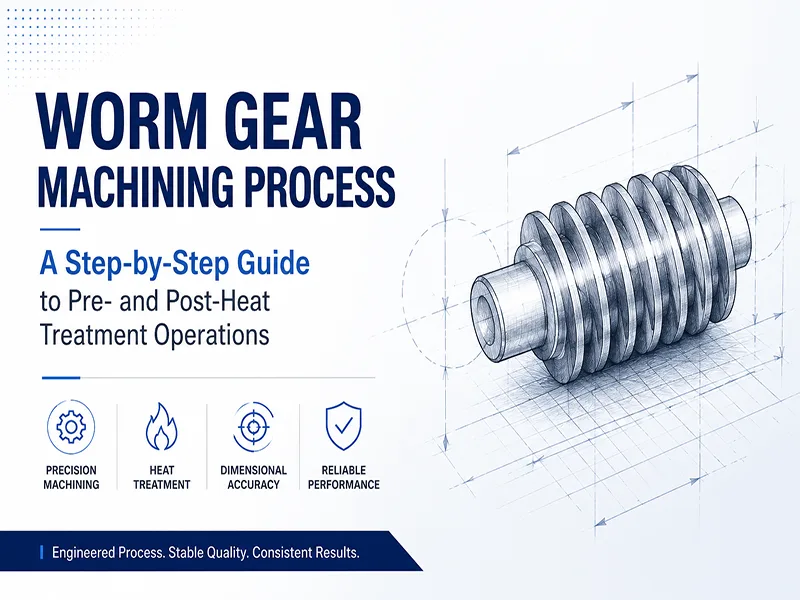
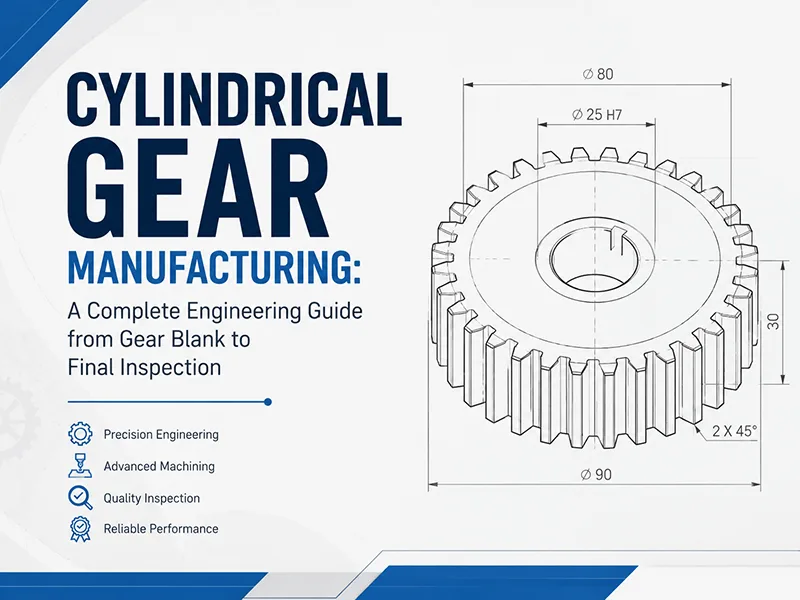
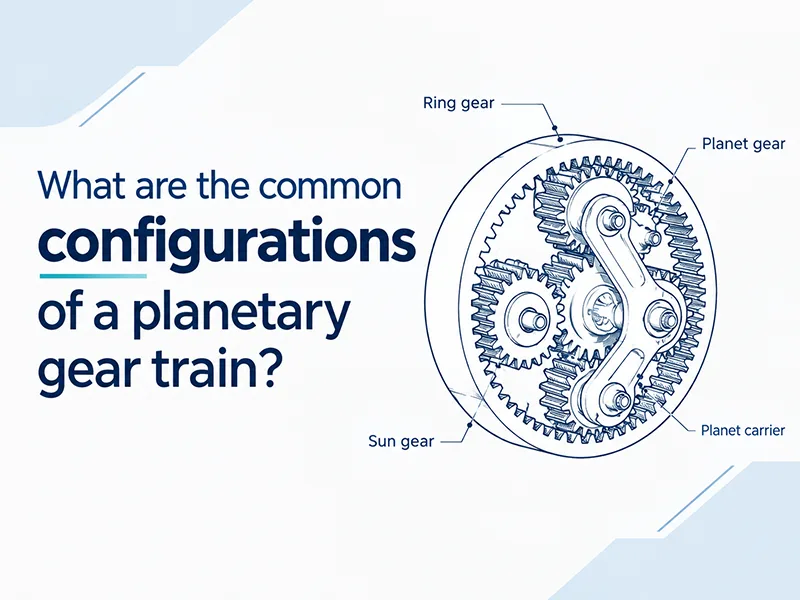
Gear Hobbing vs Gear Shaping vs Gear Skiving: Which Process Is Right for Your Gear?
Blog 2026-05-14
Choosing the wrong gear cutting process risks scrapped parts, missed tolerances, or production bottlenecks. Hobbing, shaping, and skiving are the three most common methods — each with distinct operating principles, geometry capabilities, and cost structures.
This article compares them side by side: how they work, where each excels, and where it falls short. At Hansheng Automation, we have over a decade of experience manufacturing custom precision gears across all three processes. The comparisons here are grounded in real production.
What Is Gear Hobbing?
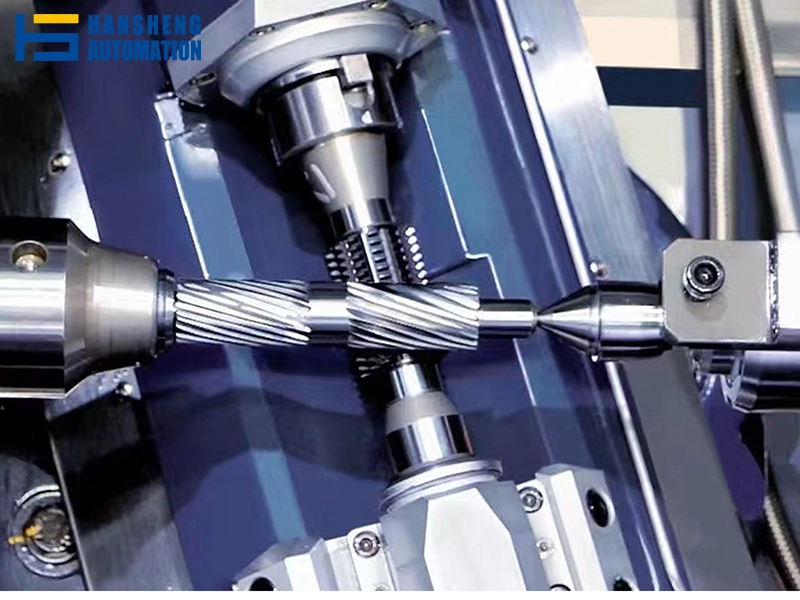
Gear hobbing uses a multi-tooth cutting tool called a hob — a cylindrical cutter with helical cutting edges arranged along its length. The hob and workpiece rotate simultaneously in a synchronized ratio, generating the gear tooth profile through continuous engagement.
Compatible gear types: Spur gears, helical gears, worm gears, splines
Key Advantages for Gear Hobbing
High production efficiency
Hobbing’s continuous rotation means no wasted motion. For external spur and helical gears, it’s significantly faster than shaping.
Consistent accuracy at volume
For medium-to-high volume production, hobbing delivers stable, repeatable results at ISO/GB Grade 6–7 — suitable for most industrial and automotive drivetrain applications.
Wide equipment availability
Hobbing machines are common, tooling is standardized, and setup time is short.
Limitations
External gears only
The hob needs a runout path after completing the cut. On internal gears, this path doesn’t exist — hobbing is physically incompatible with internal tooth profiles.
Shoulder interference
If a gear sits close to a flange, collar, or step, the hob may not have clearance to enter or exit the cut. This is a hard geometric constraint, not a setup issue.
Not suited for hard finishing
Hobbing is a soft-machining process. If your gear requires post-heat-treatment precision correction, a separate finishing step (grinding or hard skiving) is needed.
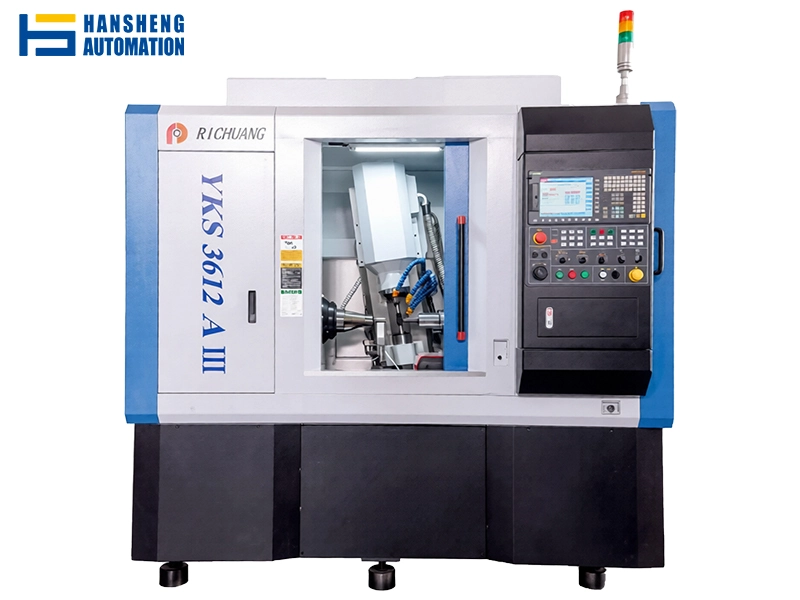
At Hansheng Automation, our Ningjiang YK3610 CNC horizontal hobbing machine handles external gears up to module 3, diameter 200mm, with achievable accuracy at ISO/GB Grade 6–7. For applications requiring Grade 5, we route parts through our gear grinding process.
→ Explore Our Gear Hobbing Capabilities
What Is Gear Shaping?
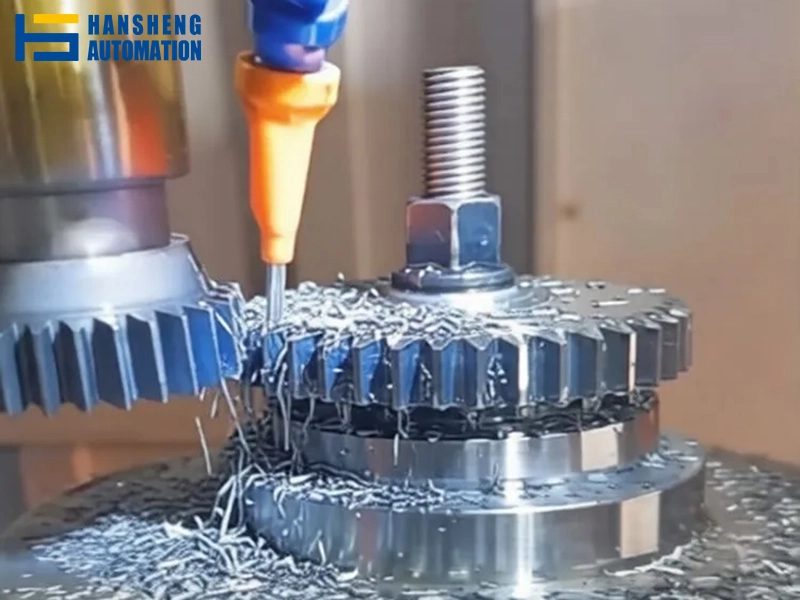
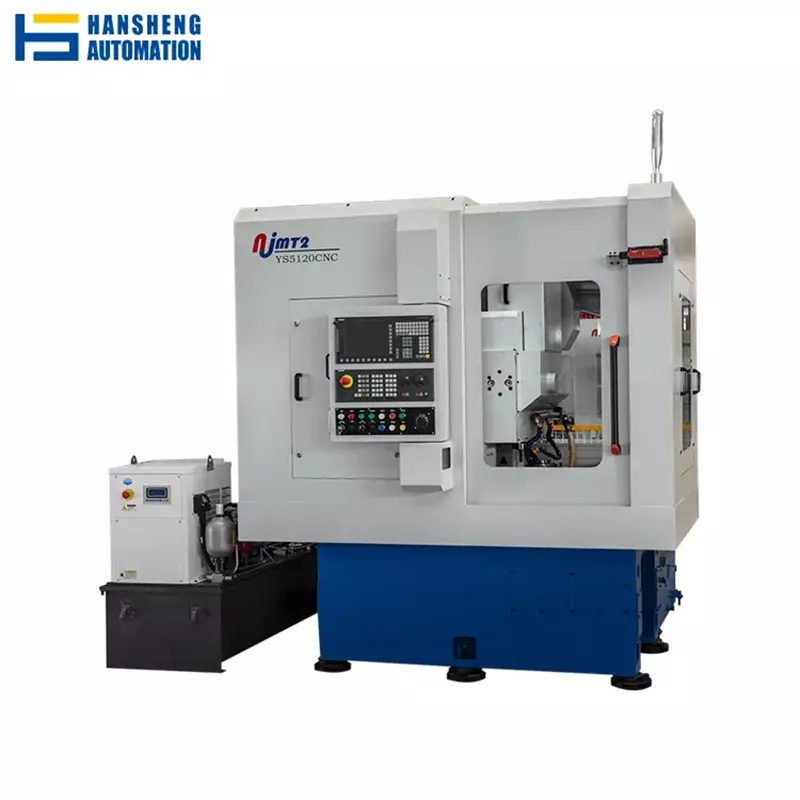
Gear shaping uses a vertically reciprocating pinion cutter, cutting on the downstroke and retracting on the upstroke. The cutter and workpiece axes are parallel and rotate in sync, with each stroke removing a small amount of material. The full tooth profile is formed gradually over many cycles.
Compatible gear types: Spur gears, helical gears, internal gears, cluster gears, gears with shoulder interference
Key Advantages
Handles internal gears (hobbing cannot)
Cutter moves axially, no runout path needed — For ring gears, planetary gears, and similar geometries, shaping remains a reliable and cost-effective solution.
Works close to shoulders and flanges
Compact cutter geometry fits tight spaces, no special fixturing required.
Low tooling cost, widely available
Standardized, inexpensive cutters; short lead times in job shops and production facilities.
Limitations
Lowest throughput of the three
Reciprocating motion includes non-cutting return stroke, making shaping the slowest process.
Efficiency drops on large-module gears
Module > 5mm increases cycle time and cost.
Accuracy ceiling below skiving
Reliably achieves Grade 7–9; Grade 5–6 is difficult to maintain.
→ Explore Our Gear Shaping Capabilities
What Is Gear Skiving (Power Skiving)?
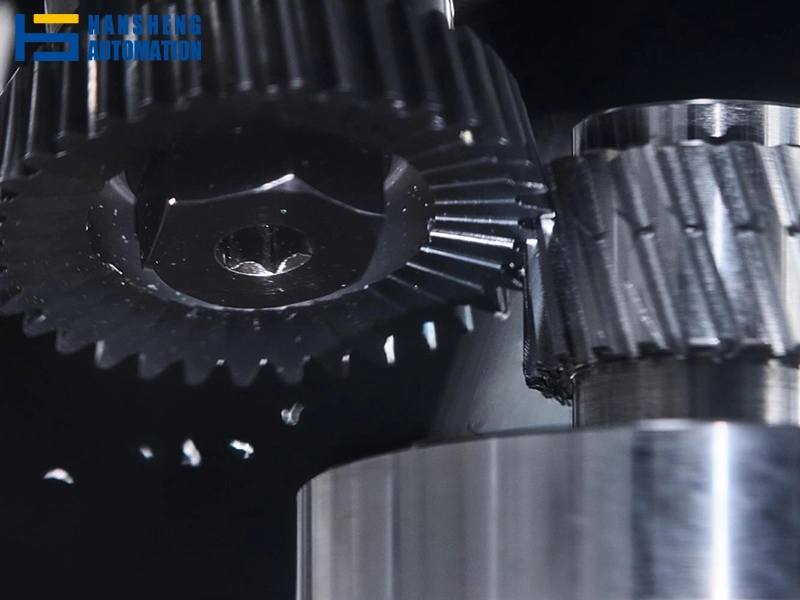
Gear skiving — often called power skiving — is a continuous rotary cutting process that machines gear teeth through a crossed-axis relationship between the cutter and workpiece. Unlike hobbing (external only) or shaping (reciprocating, slower), skiving combines continuous cutting motion with the geometric reach to handle internal profiles, making it the most versatile of the three processes.
Depending on the material condition of the workpiece, skiving is applied in two distinct modes:
Hard Skiving and Soft Skiving
Hard Skiving is applied after heat treatment, targeting gears in the HRC 58–62 range. The goal is precision correction — removing the minor distortions introduced by the hardening process to restore tooth profile accuracy. It serves as a hard-finishing alternative to grinding or honing in certain applications.
Soft Skiving is performed before heat treatment on workpieces in the HB 180–250 range. The objective here is efficient stock removal — cutting the full tooth form quickly while leaving controlled finishing allowance for downstream operations.
The two modes share the same kinematics but differ in tooling geometry, cutting parameters, and the role they play in the overall process chain.
Skiving cutter and workpiece axes are set at a crossed angle of 10°–25°. Simultaneous rotation generates relative sliding velocity at the cutting edge, producing a sickle-shaped chip and continuously forming the tooth profile.
If you would like to learn more about the detailed differences between the two, please visit: Hard Skiving vs. Soft Skiving: What’s the Difference and When to Use It.
Power Skiving Advantages
High precision machining of internal gears
Based on our experience with the KPS 30 gear skiving machine, for certain types of internal gears, the accuracy can directly reach Grade 5, while most achieve Grade 6 — this is the tightest tolerance range achievable without subsequent grinding. The starting accuracy is already very high.
2–3× faster than gear shaping
Continuous rotation eliminates return strokes. Speed advantage grows at medium batch sizes.
Handles shoulder interference
Cutter geometry clears tight spaces. Combined turning + skiving machines complete complex parts in one setup, reducing fixturing and positioning error.
Strong fit for EV and robotics applications
Planetary ring gears, sun gears, actuator internals. Power skiving is the dominant process for these internal geometries at scale.
Disadvantages
Higher equipment and tooling investment
Requires rigid machine, precise multi-axis sync, high spindle speeds. Tools (carbide/CBN) cost more than hobbing/shaping cutters and are sensitive to setup errors.
Demanding on fixturing and machine condition
Any compliance in workholding or spindle directly causes tooth profile error. Rigid fixtures and well-maintained equipment are essential.
Less economical for very low volumes
For one-off or tiny batches, shaping is more practical. Skiving’s efficiency advantage only pays off when batch size justifies setup time.
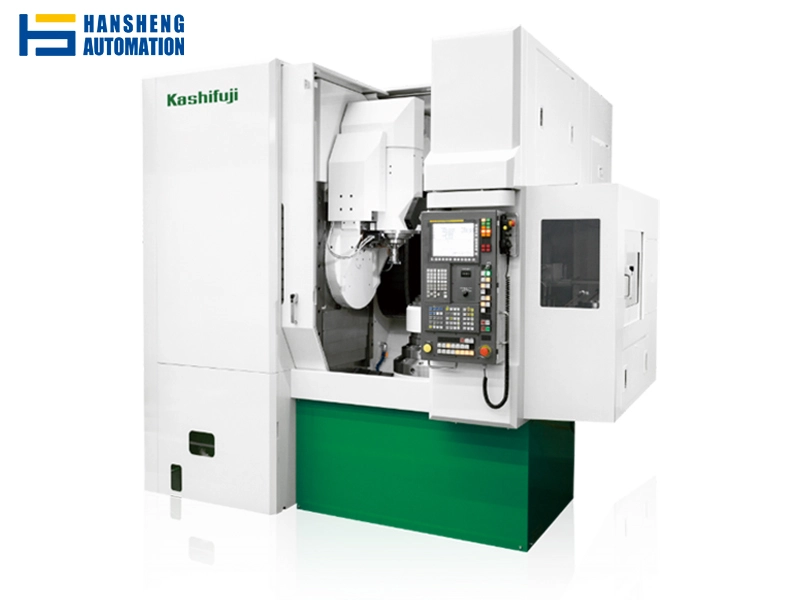
Hansheng Automation’s Kashifuji KPS30 gear skiving machine is a dedicated power skiving platform built for precision internal and external gear production. It achieves ISO/GB Grade 5–7 across a range of module sizes, and handles the tight tolerances demanded by EV drivetrain and robotics applications.
→ Explore Our Gear Skiving Capabilities
Detailed Comparison: Hobbing vs Shaping vs Skiving
Gear Geometry
| Geometry | Hobbing | Shaping | Skiving |
| External spur / helical | ✅ Best choice | ✅ Capable | ✅ Capable |
| Internal ring gear | ❌ Not possible | ✅ Standard | ✅ Best choice |
| Near shoulder / flange | ❌ Clearance required | ✅ Capable | ✅ Best choice |
| Cluster gear | ❌ Limited | ✅ Capable | ✅ Capable |
External gears — Hobbing is the default. Its continuous cutting motion is purpose-built for external profiles, and nothing matches it for throughput at this geometry.
Internal gears — Hobbing is ruled out. The choice becomes shaping vs. skiving, decided by precision requirement and batch economics.
Shoulder interference — When a gear sits adjacent to a collar, flange, or step that restricts cutter access, skiving’s compact crossed-axis geometry handles clearances that both hobbing and shaping struggle with.
Precision & Surface Finish
Accuracy requirements narrow the field quickly, particularly for internal gears.
Accuracy grades (approximate equivalents):
| Process | ISO / GB Grade | AGMA Equivalent |
| Gear Skiving | Grade 5-7 | Q10-Q12 |
| Gear Hobbing | Grade 6-7 | Q10-Q11 |
| Gear Shaping | Grade 7-9 | Q8-Q10 |
Note: AGMA equivalents are approximate. Exact mapping depends on the specific quality characteristic being measured.
Production Speed & Volume Economics
No single process dominates all volumes — the optimal choice depends on batch size.
Hobbing – Best for medium-to-high volume external gears. Continuous cutting gives short cycle times; tooling cost per part drops as volume increases.
Shaping – Better for low-to-medium volumes or where hobbing can’t work. Slow due to return strokes, but low setup/tooling cost makes it most economical for small internal gear batches.
Skiving – Competitive from medium volumes upward, especially for internal gears. 2–3× faster than shaping; requires higher tooling/setup investment, so it pays off above a certain batch size. For one-off parts, shaping wins on cost.
Tooling life (general guidance):
Hobbing cutters: long service life on standard steel grades; regrinding extends tool life further
Shaping cutters: moderate life; regrinding is routine and cost-effective
Skiving cutters: shorter life per edge, higher replacement cost; carbide or CBN grades required for hard skiving
Material & Hardness
| Condition | Hobbing | Shaping | Skiving |
| Soft (pre-heat treatment, HB 180–250) | ✅ | ✅ | ✅ Soft skiving |
| Hardened (post-heat treatment, HRC 58–62) | ❌ | ❌ | ✅ Hard skiving |
Hobbing and shaping are both soft-machining processes. They produce gears in the annealed or normalized state; if the application requires hardened gears, a separate heat treatment and finishing step follows.
Skiving is the only process of the three that operates effectively after hardening. Hard skiving corrects the tooth profile distortion introduced by heat treatment — an alternative to grinding in certain tolerance bands — making it the process of choice when a post-hardening correction step is needed.
Typical post-hardening process routes:
Standard precision (Grade 6–7): Hobbing or shaping → heat treat → hard skiving
High precision (Grade 5): Hobbing or soft skiving → heat treat → hard skiving or gear grinding
Real-World Applications by Industry
Humanoid Robotics — Joint Actuators
Typical gear: Precision planetary gearbox, internal ring gear
Humanoid robot joints require actuators that are compact, backdrivable, and capable of high torque-to-weight ratios. The internal ring gears inside these planetary stages are among the most demanding gear geometries in current production — tight tolerances, complex profiles.
Industrial Gearboxes
Typical gear: Large external helical gear
Industrial gearbox gears are typically external, large in diameter, and produced in moderate volumes. Precision requirements are real but not extreme — Grade 6–7 is the standard target range.
Aerospace
Typical gear: High-precision spur gear
Aerospace applications prioritize accuracy and surface integrity above throughput. Tolerances often sit at Grade 5–6, and any process-induced surface defect is a rejection risk.
Medical Devices
Typical gear: Small internal gear, tight tolerance
Medical device gears are often miniature internal profiles with tolerance requirements that leave no room for process variation.
How We Can Help — Our Three-Process Capabilities
Selecting the right process is only half the equation. The other half is finding a manufacturer who can actually execute it — with the right equipment, the right experience, and the ability to give you a straight answer on what’s achievable.
At Hansheng Automation, we manufacturing custom precision gears for clients across Tobacco packaging machinery, industrial, robotics, and medical sectors. We run all three processes discussed in this article — in-house, on dedicated equipment.
Our Process Capabilities at a Glance
| Process | Equipment | Max Module | Max Diameter | Accuracy |
| Gear Skiving | Kashifuji KPS30 | — | — | ISO/GB Grade 5–7 |
| Gear Hobbing | Ningjiang YK3610 CNC | Module 3 | 200mm | ISO/GB Grade 6–7 |
| Gear Shaping | Nidec SE25FR / YS5120 CNC | Module 4 | 200mm (ext) | ISO/GB Grade 7–9 |
General manufacturing range:
- Gear module: 0.1–5.0
- Tip diameter: 3mm–300mm
- Accuracy: up to ISO/GB Grade 5
- Gear types: spur, helical, bevel, rack, gear shaft, and more
For applications requiring Grade 5 accuracy, parts are routed through our gear grinding process — ensuring the final tolerance is met regardless of which cutting process precedes it.
FAQ
No. Hobbing requires a runout path for the hob to exit after completing the cut. On internal gear profiles, this path doesn’t exist. Internal gears require gear shaping or gear skiving.
For internal gears, skiving offers better accuracy (up to ISO/GB Grade 5 – 7 vs. Grade 7– 9 for shaping) and 2 – 3× higher throughput. However, shaping has lower tooling costs and a simpler setup, making it the more practical choice for small batches or lower-precision applications. Neither process is universally “better” — it depends on your requirements.
Both use the same power skiving kinematics. Soft skiving is performed before heat treatment on workpieces in the HB 180 – 250 range — it removes the bulk of material and leaves finishing allowance. Hard skiving is performed after heat treatment on gears in the HRC 58 – 62 range — it corrects the minor distortions introduced by hardening to restore final tolerance.
For external gears, hobbing is the fastest option. For internal gears, power skiving is 2 – 3× faster than gear shaping. The comparison between hobbing and skiving on external gears is more application-specific — both are continuous rotary processes with comparable cycle times in many scenarios.
Power skiving achieves ISO/GB Grade 5 – 7 in production conditions. For applications requiring Grade 5 with high confidence, a gear grinding step after heat treatment is recommended to absorb any distortion from the hardening process.